Microsoft has introduced the most recent iteration of Home windows and in conventional Microsoft style, individuals are confused by the main points. Home windows 11’s greatest modifications are instantly seen from the launched screenshots; Microsoft has taken a lot of the consumer interface design work from the now-defunct Home windows 10X, which was initially designed to run on dual-screen gadgets and compete extra with Chromebooks and iPads. We’ll cowl all the pieces that’s modified in one other article, however for now let’s reply the query that everybody is asking: what are the necessities for upgrading, can I improve, and what the heck is a TPM?
Home windows 11 Fundamental Necessities
Microsoft has raised the requirement ceiling fairly a bit for Home windows 11.
- No less than 1 GHz twin core CPU (extra on that in a bit)
- four GB RAM
- 64 GB of drive area
- UEFI and Safe Boot succesful
- Trusted Platform Module (TPM) 2.zero (additionally extra on that later)
- DirectX 12 appropriate graphics, both devoted or onboard
- No less than 9”, 720p show
At first look, these don’t sound too unhealthy, besides that Microsoft has acknowledged that, as of this writing, solely CPU’s which can be both Intel eighth Gen or AMD Ryzen 2000 collection or newer can be formally supported by Home windows 11. That sadly leaves out lots of people with machines that aren’t actually that outdated. Now, don’t panic but. Microsoft has no plans of abandoning Home windows 10 anytime quickly, and very like the scenario surrounding Home windows 7, older programs should still be capable to run Home windows 11 though they will not be *formally* supported. I think we’ll have extra particulars on that nearer to launch.
What’s TPM?
Now for the half that’s complicated the most individuals: TPM. With out getting too technical, TPM is a safety know-how that shops a encryption key, normally in a devoted TPM module, that stops unauthorized entry or modifications to or software program. Microsoft cited a big enhance in firmware-based assaults on computer systems in the previous couple of years as the explanation for this requirement, and TPM ought to assist mitigate a few of that, nevertheless that does doubtlessly go away lots of people in a difficult spot. Scalpers are already mountain climbing the value of TPM modules and provides are already decrease for the reason that announcement.
However right here’s the excellent news: you could not want a devoted TPM module. In case your system falls inside the necessities for Home windows 11 then your motherboard greater than doubtless helps both Intel’s Platform Belief Expertise (PTT) or AMD’s fTPM (firmware TPM), neither of which require a TPM module.
So what’s the TPM module for then if it’s not required? The distinction is that the encryption keys are saved within the TPM module itself, if it’s put in, quite than the firmware of the board itself. Our recommendation is to not rush out and purchase a TPM module, since you in all probability don’t want it and you can be paying greater than you must for it, at the very least proper now.
How do I discover if my PC is TPM appropriate?
First test if both Intel PTT or AMD fTPM is already enabled by opening a Home windows PowerShell as admin and typing the command “get-tpm” with out the quotes and press enter. Beneath are 2 screenshots exhibiting what it is going to appear to be if TPM is both enabled or disabled.
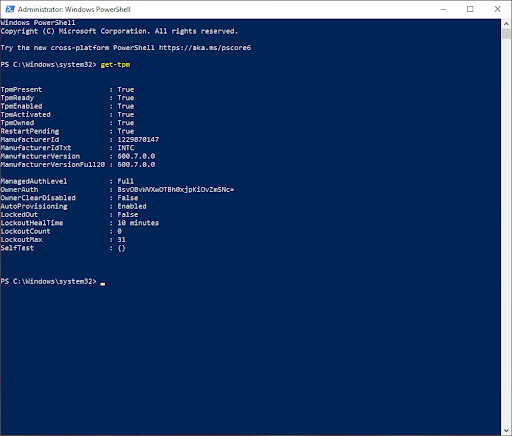
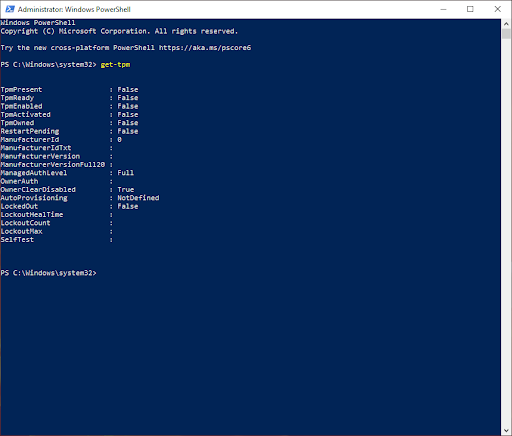
If the outcomes say that TPM is enabled, you then’re prepared to put in Home windows 11. Nevertheless, if TPM is just not enabled, you’ll need to go to the BIOS in your system and allow both PTT or fTPM by following these steps.
- Entry the BIOS. This may be completed by hitting the BIOS key throughout boot (normally F2) or utilizing the Home windows Superior Begin Menu
- Go to the Superior part (this is similar on each Intel and AMD motherboards).
- For Intel, go right down to PCH-FW Configuration and press enter. The choice to allow PTT can be there. You’re going to get a message field explaining the modifications which can be being made, simply press okay after which press F10 to save lots of and exit.
- On AMD, AMD fTPM ought to be on the high of the listing below Superior. Change it from dTPM to fTPM and press F10 to save lots of and exit.
- Afterwards, you may run that command in PowerShell once more to verify that it labored.
There’s additionally no motive to fret about UEFI or Safe Boot, as any system that’s able to working Home windows 11 will already be UEFI, and Safe Boot doesn’t have to be enabled, the board simply must be Safe Boot succesful.
Hopefully this has cleared up a few of Microsoft’s blended messaging on the necessities for Home windows 11. In case your system was constructed inside the final three years, then you might be greater than doubtless prepared for Home windows 11.

Ryan is a senior engineer and Manufacturing Supervisor at Velocity Micro. In his spare time, he enjoys getting into Carson Wentz lookalike contests and lifting heavy objects.