Two driving forces are driving the present know-how market: insatiable demand for , and the provision chain shortages making it tough to supply sufficient in amount to fulfil each order. Even with these two forces in motion, corporations must push and develop subsequent era applied sciences, as no competitor needs to take a seat on their laurels. That features Qualcomm, and as a part of the Tech Summit in late 2021, I sat down with Alex Katouzian, Qualcomm’s GM of Cell, Compute, and Infrastructure to speak in regards to the points confronted in 2021, the outlook for 2022, the place the relationships lie, and the place innovation is headed in relation to smartphone and PC.
We’ve interviewed Alex a few occasions right here at AnandTech, and whereas he has been effectively educated in coping with the likes of our pointed questions, we will inform he’s being open and sincere, telling us as a lot as he can (and typically just a little bit further). Alex has been at Qualcomm for 20 years, working his approach up by wi-fi cellular applied sciences, product administration, and taking on the MCI enterprise unit in 2017. Previous to that Alex was engineering multimedia and wi-fi chipsets, showcasing that his complete profession has been about placing next-generation connectivity into as many devices as doable.
 Alex Katouzian SVP and GM Cell |
 Ian Cutress AnandTech |
Ian Cutress: Right here at Qualcomm’s Tech Summit, you might be saying the brand new Snapdragon eight Gen 1, with new advertising, and it’s a brand new chip on Arm v9. I sort of wish to step again and take a look at the 12 months as a complete – Qualcomm launched the Snapdragon 888, and that is been in loads of flagships, accompanied by loads of them with Qualcomm 5G RF options. I do know you are an worker, and I do know you are in all probability biased, however objectively what grade would you give Qualcomm for the 12 months?
Alex Katouzian: Effectively our Snapdragon 888 is high in premium tier options. While you take a look at the capabilities that have been accessible to our clients and ecosystem by the applied sciences we offered, we topped the chart when it comes to graphics functionality, total efficiency, AI functionality, and digital camera efficiency – there are a number of telephones on the 888 which can be topping out on DXOmark. I might say our Elite Gaming functionality was excellent, we’ve carried out that in cooperation with the builders and sport engine builders. All of them have been very cottoned on. So total, I might say a reasonably excessive grade on the general efficiency of a premium tier telephone.
IC: Would you say you have had any pinch factors this 12 months, that get solved subsequent 12 months?
AK: Clearly the pandemic introduced on some provide chain points, and the severity of them fluctuated all through from the tip of 2020 by into 2021. However by being a fabless firm, it allowed us the liberty to have the ability to transfer from fab to fab, not solely on the most recent digital components of know-how, but in addition on the previous analog know-how we have had the flexibility to maneuver from fab to fab as effectively. We alleviated loads of the provision points primarily based on the flexibility to have engineering sources accessible to maneuver components and make room for shipments to occur. Despite the fact that we nonetheless went by some provide crunches, and we in all probability will undergo some provide crunches in 2022, we alleviated loads of that, and we’re in a position to get out our merchandise.
IC: Does shifting from fab to fab like that disrupt the distinctive relationships with every foundry?
AK: The connection between a fabless semiconductor firm like us and the foundry must be very tight. However these have been unprecedented occasions, and the ripple results have been nice as a result of the provision chain normally takes about 18 months to 2 years to come back to fruition. After we had that shutdown interval of say, 9-10 months, each facility within the provide chain was shutting down. They needed to restart that, to recalibrate tools, to rent employees, and any growth plans have been on maintain. Then the surge in demand for shopper digital tools was so excessive that it takes time for it to catch up. Given these ‘unprecedented occasions’, I do not assume foundry goes guilty an organization like us to attempt to diversify in such a approach that it permits us to ship merchandise. For those who look additional down the provision chain, we’re suppliers to our clients, and so they’re gonna must diversify of their provide as effectively, and somebody needed to make that alternative.
IC: Aha, so goes each methods, each up your chain and down it.
AK: Precisely!
IC: So after I got here to my first Qualcomm Tech Summit, the venue had specialist tools put in for 5G as a result of we have been nonetheless very early, very nascent in 5G. The rollout on the time was extra targeted on industrial functions, however an excellent quantity of the discuss was on mmWave versus Sub-6. The place the US is specializing in mmWave, the remainder of the world was targeted on Sub-6. If feels sort of odd, however we’re sort of nonetheless having these discussions! What has modified from Qualcomm’s perspective in these discussions?
AK: I believe an increasing number of, the carriers are realizing that ‘a layered cake impact’ of their community, spreading out, turns into a extra obligatory factor to do in crowded environments or congested areas. mmWave roll-out, regardless that typically it just a little bit harder as a result of the quantity of base station towers, it’s a must to have much more of them, regardless that they’re just a little bit harder, carriers are realizing that it truly is a lot better to have mmWave in congested areas. Then, as you go additional out to extra suburban areas, that Sub-6 can cowl and much more, possibly probably even falling again to LTE.
However that realization, and the deployment of the tools – keep in mind, we’re on the finish of the second 12 months of the business launch of 5G, and for each G, the transition takes between 10 to 12 years. So the rollout of mmWave goes to begin to occur extra. I believe extra international locations are going to begin to deploy: we have now deployment in Japan; Korea is slowly beginning to come up; China’s beginning to consider the very fact there’s numerous bandwidth accessible there for them. Then the sectors that mmWave can get utilized to are a lot wider than what we had earlier than, in numerous sectors of say financial system, manufacturing, retail – after which you could have different technique of deploying mmWave to non-public networks by way of small cell. These are all serving to. I believe if you take a look at industrial, if you take a look at manufacturing, if you take a look at automotive, there’s loads of room to develop for mmWave, and that growth goes to be from the ecosystem.
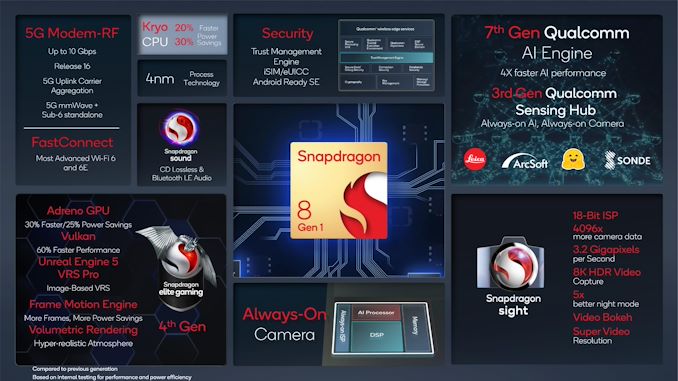
IC: For this occasion, we’re studying so much about Snapdragon eight Gen 1. As you have stated, and because the numbers present, you guys are a premium smartphone chief, persevering with from the earlier era. In my thoughts, I am juggling up the truth that as a premium chief, you wish to preserve the market share, however you additionally want every little thing to work to keep up unit gross sales. So on some degree, you could have play it secure to ensure you have that product working appropriately – however on different ranges, it’s a must to take dangers with new options, and subsequent era applied sciences that will or could not work long run. Evaluate that to all of your opponents which can be attempting to catch up, and might take these dangers. How precisely do you stability that? Is there a proper strategy to discuss how that’s balanced?
AK: I believe the best way to take a look at it’s that the technique at Qualcomm has been to take the danger on the know-how on the most important channel that you’ve got, after which re-use that know-how in merchandise in progress sectors which can be adjoining to our largest channel. So cellular is clearly the most important phase we have now at Qualcomm – so you will notice the danger taking in advancing know-how in mobiles first, regardless that if you’re taking a look at a cellular first setting, energy dissipation must be high of thoughts. Nonetheless, for example I wish to apply AI functionality to cellular, energy is the primary standards. Then I can determine my efficiency to energy ratio, and I can scale from there. But when I wish to take a look at automotive, and I wish to do autonomous driving, efficiency is the primary standards, energy is the second standards, possibly even the third. Nonetheless, we have now the flexibility to scale with our know-how roadmap, so after we take the prospect and the danger of placing sure applied sciences in cellular, we begin to consider what the functions are so we take that danger, we put it in, and see if we will develop that market. Then we will determine tips on how to scale the bottom design right into a market that wants efficiency first, and energy second. In order that’s how we take a look at it throughout the board.
It is the identical actual software on CPU – when you keep in mind, a number of years in the past, we had our architectural license with Arm. We introduced in on our personal CPU, and we took benefit of that, and we sort of tried to develop the market. At the moment, we did not have adjoining companies that we have been actually rising – we have been excited about them, however we weren’t rising them, however the software is precisely the identical. Now with Nuvia approaching board, we will do the identical factor you realize – a ‘one know-how roadmap’ that may scale. We’ll first have that first occasion of that in a PC chip sampling subsequent 12 months, attending to merchandise in 2023. Then we’re going to consider tips on how to deliver it into cellular, automotive, after which infrastructure software as effectively. So we’ve already thought of tips on how to do the facility efficiency scaling for various companies we’re going after. Identical with graphics, similar with digital camera capabilities, similar with video capabilities. Every of those applied sciences take the danger of it being launched in cellular first, scale it, take into consideration different markets that we go to after which we alter our efficiency and energy factors.
IC: It is nice that you simply stated video capabilities, and talking in regards to the digital camera, as a result of one of many factors that got here out of the shows and a few of our briefings is that Qualcomm is pushing 8K HDR, and extra superior 4K HDR recording. However the silicon does not have an AV1 decode unit, and a few individuals have stated that it’s since you guys aren’t a part of the AV1 Alliance. Are you able to shed some extra gentle on the choices there?
AK: So after we plan our applied sciences out, typically on gadgets such because the premium tier, we have now to consider issues two or three years prematurely. The timeframe that we have to introduce these gadgets may be very vital primarily based on the OEM launches, and the wants of the carriers. Given these circumstances, we’ve not been in a position to accommodate AV1. We’ll in all probability accommodate sooner or later, however up till now, we simply have not been in a position to do it. It’s not that we do not wish to do it – we simply have not had the flexibility to plan it in in time to attempt to make that occur.
IC: However you’ve obtained individuals engaged on it?
AK: Oh, sure – we have now a number of video consultants. I imply, we contribute to requirements on video consistently. We’re concerned with the place it is heading. We simply assume that in time, we’ll have these capabilities – there is no doubt. We simply did not have the chance to get it in time schedule-wise, planning it in such a approach that it’ll hit our timeline.
IC: On the subject of relationships – Qualcomm and Microsoft. The Home windows on Snapdragon ecosystem is an extended partnership, and we’re now seeing 64-bit emulation coming with Home windows 11, enabled with last-gen gadgets and future gadgets. How’s that relationship progressing? You’ve had Microsoft on stage at this occasion!
AK: Extraordinarily effectively. Our partnership with Microsoft has at all times been stable, when it comes to a cloud-and-software firm cooperating with a technology-and-hardware firm, to offer an answer that is sensible for the shoppers. They’re utilizing all these buttons, throughout telephones, throughout PC, and we’re collaborating throughout IoT, even taking a look at AI capabilities, not simply in telephones but in addition in PCs, and probably in data-center collaboration as effectively. Nonetheless, our relationship on the PC aspect has been turning into an increasing number of subtle as they be taught the capabilities and applied sciences that we have now. They’re additionally taking the danger of exploring how multimedia functionality can change into an increasing number of prevalent on the PC. As you realize, I believe you agree that cellular traits are coming to the PC and the conclusion that being able to be cellular and related and having nice multimedia, together with digital camera, together with audio, enhancing AI, all of that’s turning into an increasing number of vital, together with efficiency functionality of the CPU and GPU – a mixture of which may change into very effectively fitted to a cellular workforce.
However let me provide you with just a little little bit of a historical past. Each enterprise Qualcomm has gotten into that has had incumbents. We have had three substances that we have put in to satisfy KPIs (Key Efficiency Indicators). One is having a disruptive know-how that may make a distinction, two is a long-term funding, and three is a go to market accomplice. I can go way back to UMTS – we invested in UMTS for seven years earlier than it grew to become extra mainstream and to develop. Now, clearly, we had a disruptive strategy which was a extremely built-in resolution with a protocol stack that was worldwide examined, and we might make extra OEMs horizontal versus vertical. So we had that disruption, we put in these seven years of funding, and our go-to-market companions have been the horizontal OEMs that exist right now. We did the identical factor for Wi-Fi, and we did the identical factor for RF entrance finish.
After we are moving into the PC market, we’re doing the identical factor. We’ve got disruption, we have now long-term funding, and we have been doing this for about 5 years now. We simply invested in Nuvia, not only for the aim of the PC, however a bit of it’s for the PC, and we have now our go-to-market accomplice in Microsoft for Home windows, and we’re working with Google Chrome primarily based gadgets as effectively. So these three substances are met, and we’ll proceed enhancing our gadgets and capabilities. This additionally means working with Microsoft end-to-end, to use all the underlying applied sciences to their OS to be optimized to run on Snapdragon gadgets, after which drivers to reveal all of the applied sciences to customers.
IC: If I might get some readability on the connection between Qualcomm and Microsoft. There have been public discussions concerning what you name Home windows on Snapdragon (named due to the connection, though lots of people prefer to name it Home windows on Arm). There have been reviews saying that, between Microsoft and Qualcomm, there’s been an unique settlement for these Home windows on Arm/Home windows on Snapdragon collaboration exclusivity is slowly coming to an finish. Is there something you possibly can touch upon that?
AK: I actually cannot touch upon that, however as I stated, the cooperation between us has by no means been this robust, and I believe for the foreseeable future we will work with them extra to extend the capabilities of Arm and/or Snapdragon primarily based options.
IC: So that you talked about Nuvia a few occasions, a subject very pricey to my coronary heart. I’ve met with Gerard, Manu, and John pre-acquisition, and I used to be actually wanting ahead to their server chip they have been going to supply. So I have to admit just a little little bit of me died if you guys acquired them, however I have to applaud that it was a intelligent transfer in buying them. Given what Qualcomm CEO Cristiano Amon was saying on the time, saying about ACPC since its inception, it truly is the route it must go in. I do know Nuvia is extra the subject for subsequent 12 months’s summit, as you have stated sampling in 2022, product in 2023. How is that acquisition going, and the way is the staff integrating?
AK: Extraordinarily effectively, extraordinarily effectively. The founders are very lively, and I can personally say I in all probability meet with them on a weekly foundation, as much as two or 3 times per week. My colleagues which can be operating the PC enterprise inside my enterprise unit meet with them every day. We overview roadmaps on a regular basis, we overview methods, we’re very cooperative on tips on how to go to market, not simply within the close to future, however in the long term as effectively. The system structure, the chipset structure, are all being mentioned constantly – partitioning is being mentioned constantly, so it is a very tight integration of this staff, and that is precisely the way it additionally occurred prior to now. For instance, we purchased two Wi-Fi corporations, one is Atheros. We combine these groups in inside the Qualcomm group and sort of make them one Qualcomm, after which we proceed that approach. That is precisely what’s taking place with the Nuvia staff as effectively. And I might say, on the server aspect, that these are opportunistic companies that we’ll go after. So we’ll see what occurs.
IC: Will the Nuvia core be known as a Kryo core, or will you could have any fancy advertising identify for it?
AK: I have never thought of it but – it undoubtedly will not, or in all probability received’t, be Kryo. However we’ve not thought of it but.
IC: Give me a name if you want a reputation!
AK: Hah, positive!
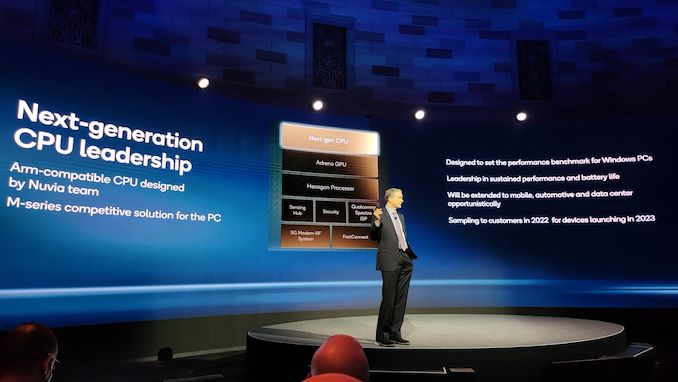
IC: For those who can maybe clear one thing up for me: is the Nuvia staff making a single core, or each an enormous core or just a little core? Or is it that they’re dealing absolutely with the SoC construction into which you add within the connectivity and the graphics?
AK: It’s each, all of the above. By that I imply that it is not possible for us to place out a chipset resolution as subtle as this with out having your entire system being considered. Consider it this fashion: the CPU by itself is a part of the ‘one know-how roadmap’, however so is graphics, and different issues. Then we’re actually excited about bringing a whole system resolution to the PC and altering it in such a approach that you do not go after the standard designs. , we talked about this earlier than, we’re in search of invoice of fabric financial savings, we’re taking a look at design financial savings, we’re taking a look at inside routing, we’re taking a look at shell designs, and we’re taking a look at thermals – the entire thing. So it must be a whole resolution. In order that they’re undoubtedly concerned in the entire SoC design, and so they’re concerned in taking a look at a number of totally different cores, the place it is sensible. Whether or not it is massive cores, little cores, or a mixture of what number of.
IC: Nuvia’s design can be Arm-based, and the Nuvia staff comes from individuals who constructed Apple’s M1 and expertise from Google. So will that chip compete primarily in opposition to Apple as a result of it is ARM-based, or in opposition to Intel as a result of it is Home windows-based?
AK: The gadgets that we will come out with primarily based on the brand new CPU design and the brand new structure, will compete head on with Apple.
IC: So if you do your comparability charts, you will be evaluating in opposition to Apple?
AK: Sure.
IC: Is that as a result of Intel is now not within the image? Or is that simply because that’s the place the market is?
AK: The best way we take a look at it’s that we’re not going after discrete designs: we’re going after an SoC and the structure that makes the very best sense for the PC. Like I stated, cellular traits are coming into the PC, and I agree with you that efficiency sensible in comparison with cellular it’s a lot increased, it has extra energy dissipation functionality, however we will attempt to make it so much sleeker and have much more cellular primarily based. So our comparability is to an organization that may do each kinds of SoC and produce that functionality to the PC, so we’re actually getting ready ourselves for that.
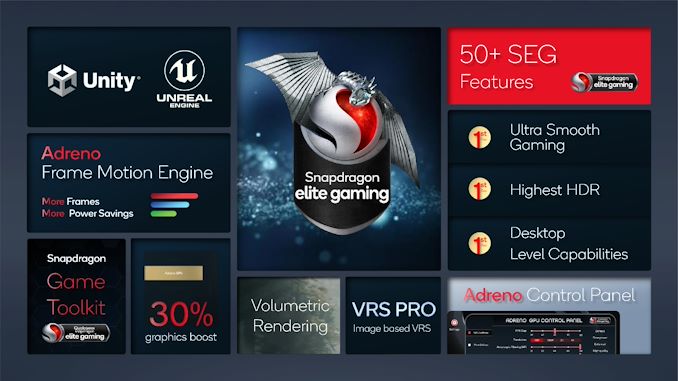
IC: Qualcomm has a really environment friendly graphics structure in Adreno. It normally performs rather well within the cellular SoCs, however we’re at present at a time the place the discrete GPU market goes bananas, and every little thing is promoting. I might like to see a scaled Adreno GPU, and provided that Intel can also be popping out with its personal, Qualcomm may very well be an incredible fourth competitor in that house. We’d like to get your feedback on that, however the important thing factor is: when you have been to do this, what colour wouldn’t it be? AMD is purple, Intel is blue, NVIDIA is inexperienced, and so is an Adreno discrete GPU going to be gold?
AK: It is arduous to say as a result of we do not even have that product! However when you assume alongside the traces of premium, yeah, you realize, it could be some shade of gold. However consider it this fashion: we have now to enter the PC market with a really subtle design that we have already labored on SoC-wise until now, however we will get a lift in relation to CPU functionality. We will scale our GPU functionality identical to we mentioned earlier than, and we have now the flexibility to scale throughout these gadgets. So we undoubtedly could have far more performing GPU and CPU cores. Clearly additionally concentrating on energy dissipation, and people ratios have gotten to be proper, so if we choose a design level inside the PC, we’ll undoubtedly want these necessities. Then we will break off at discrete GPU if the enterprise is sensible for it, however we undoubtedly have the aptitude to scale to that degree and the design functionality to supply one thing in that market. Plus, the arduous play is about having far more of an ecosystem. So as soon as we get into the market extra closely, and get extra video games developed on there for instance, and different functions, then, the likelihood at all times existed.
IC: To me, it’s a no brainer! Glorious, thanks a lot Alex to your time.
AK: Thanks Ian!
We’ve got an upcoming interview with Qualcomm’s Miguel Nunes, Senior Director of ACPC, about the way forward for that line of merchandise. Say tuned!